



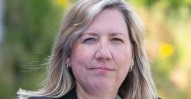
Carla Riddell is Chief Technical Officer at Serica, with nearly 30 years of experience across the energy sector. She leads the company’s Developments, Subsurface, Technical Engineering, HSE, ESG and Risk functions, helping shape Serica’s strategic direction.
Previously, Carla held senior leadership roles at Centrica and Spirit Energy, with experience spanning oil and gas and renewables including biopower, energy from waste and offshore wind. .
She holds degrees from Durham University, the University of Sheffield and Robert Gordon University. Until recently Carla was also an Honorary Lecturer at the University of Aberdeen, a strong advocate for education and mentoring, and a Fellow of both the Energy Institute and the Geological Society
How long have you been in your current role as CTO at Serica Energy?
Almost a year. It’s a new role in the company, introduced to give the technical disciplines a clear voice and presence at Executive level.
What made you decide to apply for the role?
I love the breadth of the role. It covers many areas of the business that are not directly involved in day-to-day operations, including HSE, Subsurface, Developments, Risk, ESG, IT and Digital.
I’m a geologist by background, so this was also a great opportunity to get closer to my subsurface roots again, but in a role where I can make a broader contribution. I’m certainly not an expert in every area I’m responsible for, which is why having an experienced team with deep technical expertise is so important.
What might a typical day look like?
There is definitely no typical day! The areas I’m responsible for tend to be focused on tactical and strategic decisions. Alongside the rest of the Executive team, I’m involved in decisions about where we invest to deliver our strategy and how we set the business up for the future.
What has challenged you in your current role?
The pace of change in the energy industry is hard to keep up with. I’m working in a company that is growing quickly, so organisational change, adapting to new ways of working and new assets, and managing both the risks and opportunities, such asaround cyber security and AI are all big areas of focus right now.
Following the publication of PfW’s Annual State of the Nation report, we saw female representation at CTO level increase by 6% to 25%. What do you think might have driven that increase?
My career has not been a linear path. I’ve worked as a technical expert, in strategy roles and in asset operations. The CTO role is a great opportunity to draw on that varied background. It is also a role that is changing quickly. There is more space now for different types of CTOs, including people who have not come through a purely technical or technology route. With change usually comes opportunity, and I think that is impacting the CTO role more than many other senior positions.
As a woman within the C-Suite, what do you think companies need to do enable women to move into this level and stay?
Flexibility has been a big factor for me. I don’t want women to feel they have to choose between a job they love and their family, so creating an environment where flexibility is normal and trusted makes a real difference.
I got my first Executive role while I was on maternity leave, at a time when I thought I might be forgotten about or overlooked. That experience really shaped my view. Companies get real value from having a strong talent pipeline, active sponsors and processes that continue to support people at every stage of their career.
For women who are at C-Suite level, what is their role in promoting gender diversity?
Diverse teams make better decisions, and for any manager, building and maintaining strong teams is part of the job. For women at Executive level, there is also a responsibility to share what is and is not working, to be visible and relatable role models, and to use our positions to call out the microaggressions and behaviours that can hold people back.
As a woman in a senior role with commitments outside of work, how do you carve out time for yourself, so you ensure you don’t burnout?
For me, it’s important not to feel as though I have to choose between my role, my family and myself — as if one has to win at the expense of the others.
I try to find enjoyment in the everyday, even the mundane, and to spend as much meaningful time with my family as I can. That helps me feel grounded and makes it easier to keep perspective when work is busy.Do you have any book or podcast recommendations for either women in leadership or women looking to get there?
I really like The Making of a Corporate Athlete by Jim Loehr and Tony Schwartz in Harvard Business Review. It talks about the importance of investing in physical, emotional and spiritual wellbeing as a key part of sustaining and flourishing in your career.
Finally, what is your one hope when it comes to gender diversity within the energy sector?
In the past I’ve worked in traditionally very male-dominated environments, including offshore and in power generation plants. My hope is that gender diversity in the energy sector becomes less of a special topic and more simply part of how we build strong, capable teams. I’d like to see women represented at every level, particularly in operational and technical roles, so that the next generation sees energy as a sector where they can belong, contribute and lead.